
Satisfied or very satisfied
Trainer quality
Avg trainer score /100
Would recommend
Of people think differently to you
Meeting of the Minds
It’s a lively, hands-on Emergenetics session that turns how a team thinks and communicates into something you can see and use.
Using the Emergenetics® model, we use interactive activities that map the group’s collective mind, so colleagues understand their own strengths and appreciate one another’s.
Together we explore how different styles shape communication, where intent and impact drift apart, and how to work better as one.
People come away understanding their own natural style, recognising the styles of others, and — crucially — learning how to flex their communication so colleagues feel understood on their own terms. This means leaving with a shared language and practical strategies that make collaboration easier long afterward the session.
What Makes A Meeting of the Minds Session Land
A shared language
Emergenetics gives everyone the same vocabulary for how they think and behave — so difference becomes describable, not personal.
Read the room
Recognise why the same message lands differently for different people — and how to adjust before it causes friction.
Flex your style
Practise adapting tone, language and approach to connect with colleagues whose preferences differ from your own.
The Platinum Rule
Move from “treat others as I would like to be treated” to understanding and meeting people on their own terms.
Stronger teams
Use the differences in the room to balance the team, share the work, and collaborate, negotiate and lead better.
The Seven Emergenetics® Attributes:
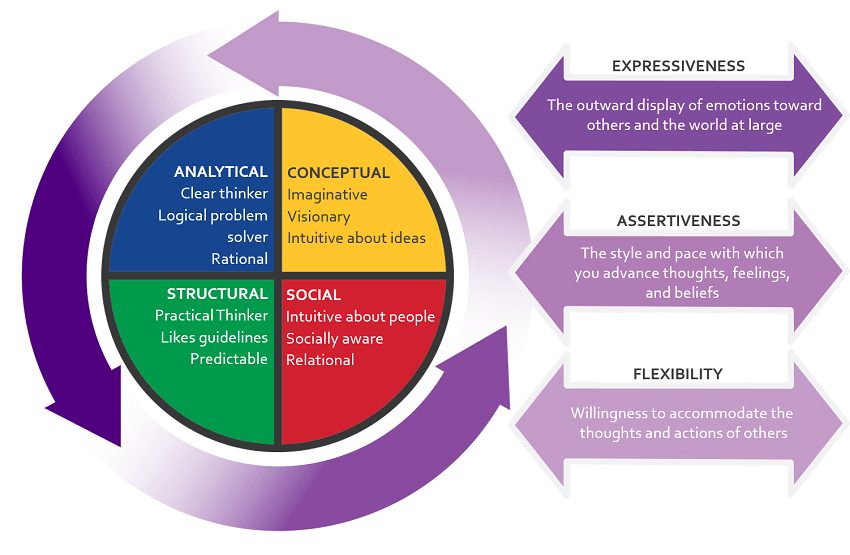
The Four Thinking Preferences:
Analytical
Logical, data-driven, objective
Conceptual
Visionary, creative, experimental
Social
Relational, empathic, people-first
Structural
Practical, predictable, process-led
The Three Behavioural Attributes:
Expressiveness
How you engage with others
Assertiveness
Pace and directness in communication
Flexibility
Openness to new ideas or change of position
Interactive, reflective and grounded in real examples
Six threads run through the session — each designed to leave people with something they can use the next morning.
Know your own preferences: "Great for reflection."
Map your thinking and behavioural preferences across the four thinking and three behavioural attributes of Emergenetics — and what they mean day to day.
Understand others: "I learnt loads about myself and others."
Recognise how colleagues prefer to think and communicate, and why a single approach will never reach everyone in the team.
Flex your communication: "How to approach others more effectively."
Practical exercises in adapting your tone, language and style so your message actually lands with different kinds of thinker.
Apply the Platinum Rule: "Understanding people on their own terms."
Shift from assuming others work like you do to meeting them where they are — the heart of healthy, respectful working relationships.
Build better teams: "Helpful when building teams."
Use difference deliberately — to balance a founding team, allocate work to strengths, and reduce avoidable conflict.
Rethink what a leader looks like: "You don't have to be a certain person to be a leader."
Recognise that leadership means drawing out the strengths of others and communicating in the way they best understand.
In the room, on screen, or as part of a wider programme
The session works as a standalone team day, a slot within a leadership programme, or a kick-off for a new founding team.
In-person team session
A highly interactive workshop for teams who want to understand one anotherand work better together. Ideal for offsites and team days.
Virtual delivery
Fully interactive on Zoom or Teams — using polls, breakout rooms and reflection, not slides-plus-talking-head.
Founder & venture teams
What Participants Say

ACCEL participant, The Møller Institute, Cambridge
“A really great introduction. It helped me become more aware of myself but also of others — and made me realise you don’t have to be a certain kind of person to be a leader. Instead you support the strengths of others and communicate in a way they best understand. The presenter was super engaging.”

A Climate-tech founder, Carbon13 Venture Builder
“I think Anna is an exceptional presenter. She made the day feel engaging and interesting, and she’s very relatable — she didn’t just talk in definitions, she helped us feel and understand the different contexts.”

SLT Training Participant, Cynergy Bank
“The most meaningful part was the focus on self-awareness in leadership — the idea that not everyone thinks, communicates or decides the same way. The communication-adaptation exercises made it practical rather than theoretical.”

Founder, Carbon13
“The concept conveyed the beauty of diversity in thinking and behaviour in a well-structured and entertaining way. Energising, memorable and useful — with great use of breakouts that gave us room to think, discuss, practise and reflect.”
Case Study:
The Moller Institute, The University of Cambridge
Delivered as the opening self-awareness module on the ACCEL leadership programme, the session challenged participants’ assumptions about leadership and helped them recognise that different people contribute in different ways. Encouragingly, the learning translated into behaviour.
One of the highest-rated sessions on the programme
“Your session was one of the most highly rated and well-received across the programme. Participants consistently highlighted how valuable it was in developing self-awareness, understanding their thinking preferences, and reflecting on how they contribute within teams — it resonated strongly and left a lasting impression.” ACCEL Programme report, The Møller Institute, Cambridge
What Made This Session Land?
I’m more observant: “I’ve already started being more observant of both myself and others.”
I’m more self-aware: “I’m more conscious of what I enjoy and don’t enjoy in a team, and improving the parts I’m less confident at.”
I’m more intentional: “I’m more mindful of how my words and tone shape the group — so every member feels empowered to contribute.”